How to Stop Mis-Hitting Volleys in Pickleball
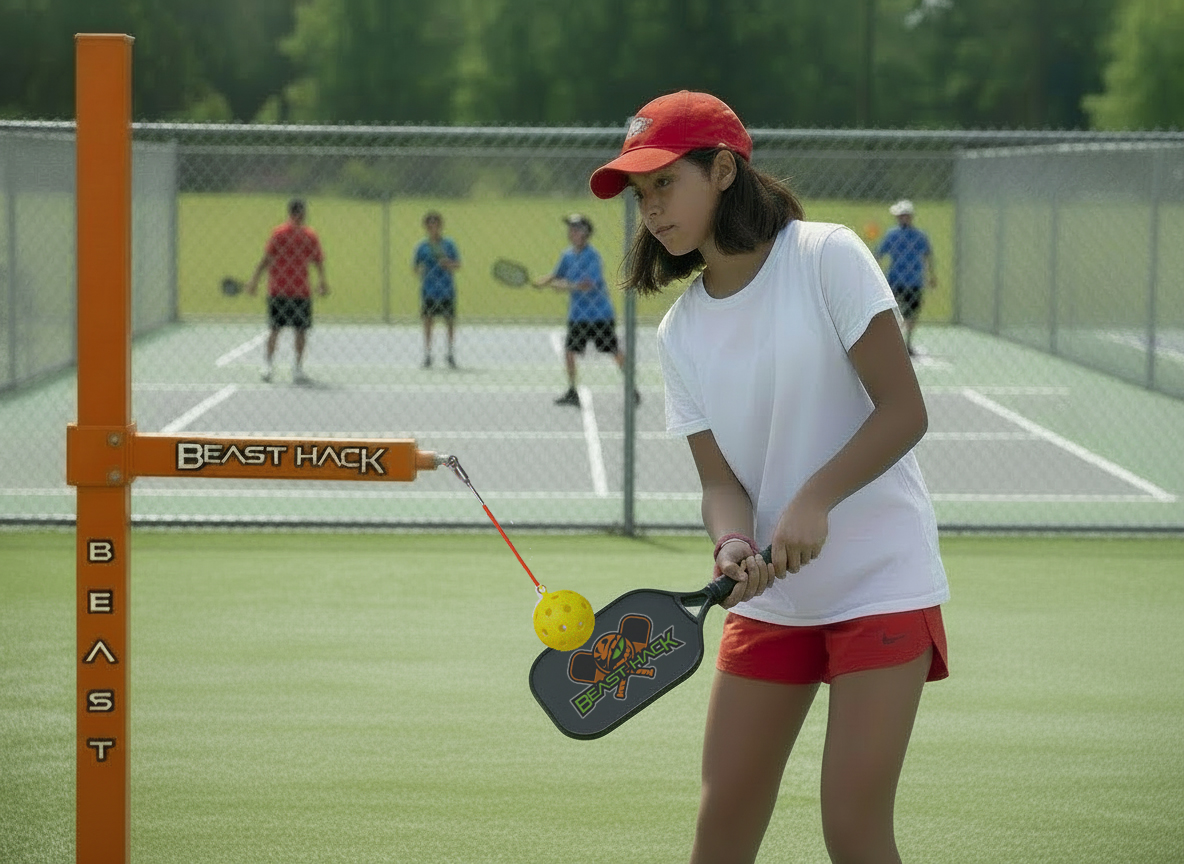
You are at the kitchen line, paddle ready, and the ball comes floating over the net. You take a swing and clunk. It hits the frame or dribbles weakly into the net.
Sound familiar?
Mis-hitting volleys is easily one of the most common complaints among recreational pickleball players right now. It is frustrating because volleys should feel like one of the easier shots in the game, yet many players struggle with them consistently.
The good news is that this is very fixable once you understand why it is happening and train the right way.
Why You Keep Mis-Hitting Volleys
Most recreational players mis-hit volleys for the same few reasons.
Too Big of a Backswing
Many players take a big swing at the ball like they are hitting a groundstroke. This creates timing issues and makes it much harder to control the paddle face.
Poor Contact Point
Hitting the ball too far in front of the body or too close to the body throws off the angle of the paddle and leads to off-center contact.
Gripping Too Tightly
Tension in the hands and arms makes the paddle face unstable at contact. One small movement and the ball hits the frame instead of the sweet spot.
Lack of Repetitions
Most players only get to practice volleys during actual games. Without high-quality, repetitive practice, the muscle memory never fully develops.
The Real Fix: Smaller, More Controlled Volleys
The best volley technique at the recreational level is usually smaller and more compact, not bigger.
Here is what good volley technique actually looks like:
- Very short backswing (almost no backswing at all)
- Contact out in front of your body
- Paddle face slightly open
- Soft hands with a relaxed grip
- Punching through the ball rather than swinging at it
When you keep the swing short and controlled, you dramatically increase your chances of hitting the center of the paddle. This is especially important when you are playing against bangers who hit the ball harder. Trying to take a big swing usually backfires.
Why Most Practice Does Not Help Much
The biggest problem with improving volleys is practice quality.
Most players stand at the kitchen line and have someone feed them balls. The problem is that the feeds are often inconsistent, and players end up chasing balls or taking long pauses between reps. This makes it hard to build real muscle memory.
What you actually need is high-repetition, consistent contact so your hands and paddle learn the correct feel.
This is where tethered-ball training becomes extremely effective for pickleball players.
How Tethered-Ball Training Helps Fix Volley Issues
When you use a system that keeps the ball attached and returning on a consistent path, you get several major advantages:
- Every rep is a quality rep (no chasing balls)
- You can focus purely on technique instead of reacting to bad feeds
- You get immediate feedback when your contact is off
- You can train volleys at game speed without needing a partner
This type of training helps players develop quick hands and better paddle control much faster than traditional drilling.
How Beast Hack Helps Pickleball Players Improve Volleys
At Beast Hack, we designed our pickleball training equipment specifically around the idea of high-quality, repeatable reps.
Our Pickleball Circuit Training Wall (coming soon to parks and recreation facilities) and our permanent hitting stations allow players to practice volleys, dinks, drives, and overheads with consistent ball return. Because the ball is tethered, you can take hundreds of quality swings in a short amount of time without needing a partner or picking up balls.
This is especially valuable for recreational players who want to improve but do not always have someone to practice with.
For families and individuals training at home, the same principles apply. Consistent, controlled reps build the muscle memory needed to stop mis-hitting volleys under pressure.
Train volleys with clean, repeatable reps at home.
Explore Beast Hack Pickleball TrainersQuick Tips to Stop Mis-Hitting Volleys
Here are a few practical things you can start doing today:
- Shorten your backswing dramatically. Think punch instead of swing.
- Keep your paddle out in front of your body.
- Relax your grip pressure, especially on the non-dominant hand.
- Practice with a purpose. Focus on one thing at a time (contact point, paddle angle, or soft hands).
- Get as many quality reps as possible, even if it means using a training tool.
Final Thoughts
Mis-hitting volleys is incredibly common, but it does not have to stay that way.
The players who improve the fastest are the ones who stop taking big swings and start focusing on small, controlled, repeatable contact. When you combine better technique with high-quality practice, your volley consistency improves quickly.
If you are serious about improving your pickleball game, especially your volleys, having access to consistent, high-repetition training makes a massive difference.
Beast Hack equipment is built to give players exactly that: clean, repeatable reps that help you build real skill instead of just hoping it shows up in games.
Ready to train smarter?
Check out our current pickleball training solutions, or stay tuned for the upcoming Pickleball Circuit Training Wall designed for parks, recreation departments, and serious players.
About the Author
Keaton Smith is the founder of Beast Hack™ and a former professional baseball player who played in the Austrian Bundesliga. The Beast Hack™ training methodology was inspired by hitting lessons from Paul Blair, a two-time World Series champion with the New York Yankees.