Why Parks & Rec Directors Are Replacing Batting Cages with Beast Hack® Stations
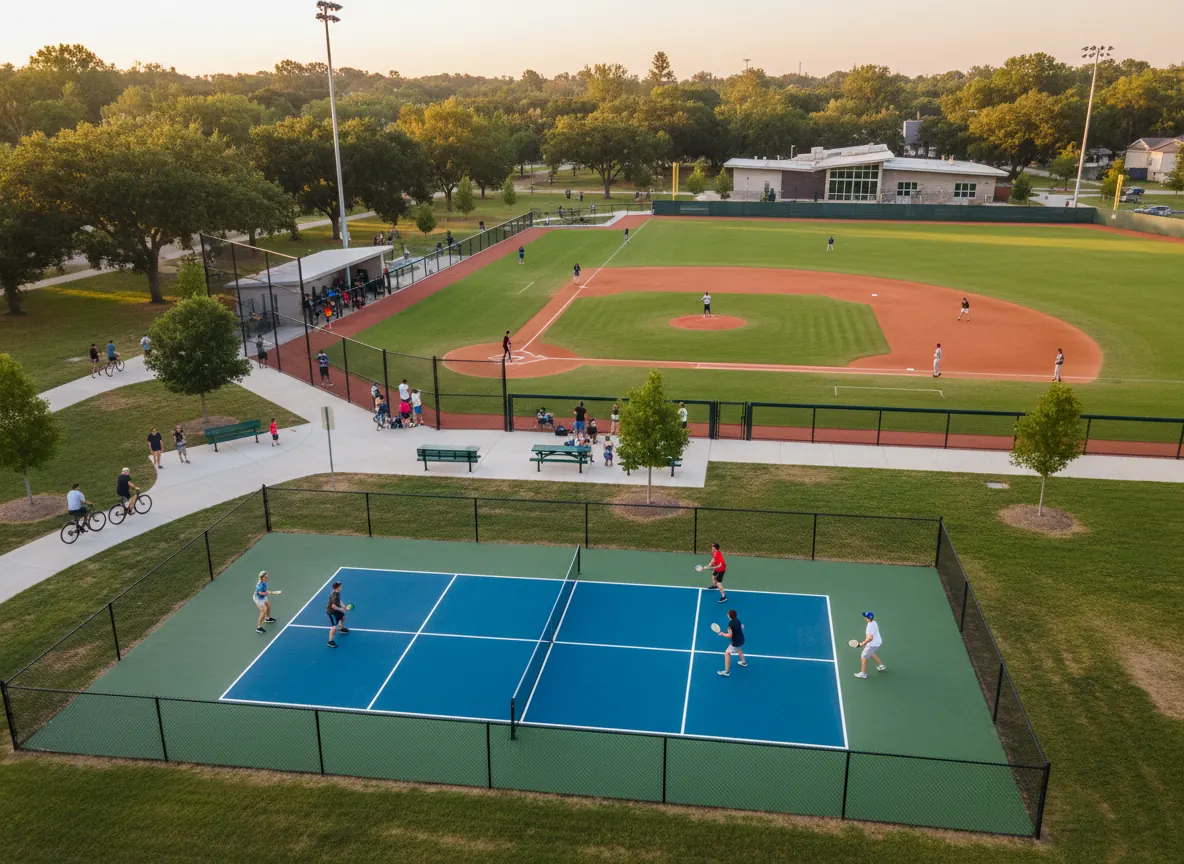
If you manage a parks and recreation facility, you already know the headaches that come with traditional batting cages: constant maintenance, net replacements, pitching machine repairs, limited capacity, and the ever-present liability of balls flying at players.
What if there was a better way?
Beast Hack® modular hitting stations are changing how parks departments think about baseball, softball, and now pickleball training infrastructure. Here's why facility managers across the country are making the switch.
The Space Problem
A traditional batting cage requires a 40' × 14' footprint, that's 560 square feet for ONE player at a time.
In that same 560 square feet, you can install four Beast Hack® baseball/softball stations, each requiring only a 10' × 10' footprint. That means four players training simultaneously in the same space that used to serve one.
Pickleball stations are even more compact, just 5' × 5' per station. You could fit eight pickleball training stations in the same footprint as one batting cage.
For parks with limited acreage, this isn't just an upgrade, it's a multiplier.
The Maintenance Problem
Batting cages are maintenance nightmares:
- Nets tear and need replacing ($500-$2,000+ per cage)
- Pitching machines break down and require servicing
- Balls wear out and need constant replenishment
- Electrical systems need inspection and repair
- Safety padding deteriorates in weather
Beast Hack® stations are virtually maintenance-free. There are no nets, no machines, and no loose balls. The only routine maintenance is applying a single drop of lubricant to the rod end swivel bearing when needed to keep the rotation smooth and silent, a 10-second task your maintenance team can handle on their regular rounds. The permanent stations are secured in concrete and built with heavy-duty steel fabricated right here in Georgia.
The Cost Comparison
Let's look at a real two-year cost comparison for a typical parks department:
Traditional Batting Cage (1 cage):
- Initial installation: $15,000 - $35,000
- Annual maintenance: $2,000 - $5,000
- Ball replenishment: $500 - $1,000/year
- Net replacement (every 2-3 years): $1,500 - $3,000
- 2-year total: $20,000 - $49,000
- Capacity: 1 player at a time
Beast Hack® (4 baseball/softball stations in same space):
- 4 stations at $1,171.17 each: $4,684.68
- Annual maintenance: Minimal (occasional bearing lubrication)
- Ball replenishment: $0 (tethered ball system)
- 2-year total: ~$4,700
- Capacity: 4 players simultaneously
That's a 25-30% cost savings at minimum, and you're serving 4x more players.
The Self-Teaching Advantage
Here's something batting cages can never offer: Beast Hack® stations actually teach players how to hit.
Traditional batting cages throw balls at players. That's it. There's no feedback on swing mechanics, no correction of bad habits, and no way for a player to know if they're improving or just making the same mistakes faster.
Beast Hack® stations use a patented rotation feedback system. When a player strikes the ball, the direction of rotation tells them exactly what happened during their swing, and how to correct it. The rod end bearing allows the ball to spin on any axis, giving instant visual feedback on contact point, hand path, and swing mechanics.
This means:
- Kids can practice alone and actually improve
- Non-expert parents can bring their children to the park and let the station do the coaching
- Parks departments provide genuine skill development, not just recreation
Two Sport-Specific Systems
Beast Hack® offers dedicated systems engineered for each sport:
Baseball/Softball Stations, Built with 2.5-inch square steel uprights and a larger arm assembly designed for bat-speed training. The heavier construction handles the impact forces of baseball and softball swings.
Pickleball Stations, Built with 2-inch square steel uprights and a slightly smaller arm assembly optimized for paddle sports. More compact footprint (5' × 5') reflects the shorter swing arc of pickleball.
Both systems use the same rod end bearing rotation feedback design. Both are built with heavy-duty steel in Georgia. Both are designed to last for years of outdoor use.
Real Results
Don't just take our word for it. Here's what's happening at parks that have installed Beast Hack® stations:
Cochran Park, Henry County, Georgia installed 6 stations and saw significantly increased training capacity and reduced wait times for youth programs.
Burke County Recreation expanded year-round training access across multiple facilities with 5 stations.
Red Bug Lake Park in Seminole County, Florida added 3 stations to their 60-acre multi-sport complex, providing modern training options alongside their existing facilities.
Sole Source Procurement
Beast Hack® is the sole source provider for all products under the Beast Hack brand, protected by five active United States patents. No other company can produce these products. This qualifies Beast Hack® for sole source procurement by government entities, simplifying the purchasing process for parks and recreation departments.
3 Sports, 1 Brand
The newest addition to the Beast Hack® lineup: pickleball training stations. With 48.3 million pickleball players in the US and growing at 11-15% annually, parks departments are scrambling to add pickleball infrastructure. Beast Hack® now offers permanent pickleball stations starting at $793 , using the same proven rotation feedback technology in a more compact package.
One brand. Three sports. Virtually zero headaches.
Ready to Learn More?
Contact us for a custom quote for your facility, or visit our Parks & Recreation page to see case studies and pricing.
📞 (678) 863-9700
📧 sales@beasthack.com
🌐 beasthack.com/parks
Train smarter. Hit harder. Take a Beast Hack!
About the Author
Keaton Smith is the founder of Beast Hack® and a former professional baseball player who played in the Austrian Bundesliga. The Beast Hack® training methodology was inspired by hitting lessons from Paul Blair, a two-time World Series champion with the New York Yankees.