Simplifying the Youth Baseball Swing: A Parent Guide
By Keaton Smith, Founder of Beast Hack | November 2, 2026
Every spring and fall, thousands of parents step onto youth ballfields across the country to volunteer as coaches. Others spend warm afternoons in the backyard with a bucket of baseballs, wondering how to help their 8-year-old or 12-year-old make solid contact. If you have ever felt a little out of your depth trying to break down a swing for a young player, you are in great company.
In online dugouts and parent forums right now, the same questions keep surfacing: How do we fix a choppy swing? What cues actually help a young hitter instead of confusing them? How do we build confidence without getting bogged down in complex mechanics?
The great news is that teaching youth baseball does not require a degree in biomechanics. In fact, young players thrive when we keep things simple, fun, and consistent. Here is how you can help your hitter develop a clean, repeatable swing while keeping the joy in the game.
Ditch the Overloaded Cues and Focus on Rotation
When a young hitter struggles with weak pop-ups or swinging over the ball, our natural instinct as parents and coaches is to offer quick verbal fixes. We shout things like "keep your eye on the ball" or "chop down on it." While well-intended, cues like "chop down" often create the exact issue parents are trying to eliminate: a steep, choppy bat path that slices across the hitting zone for only a fraction of a second.
A clean baseball swing is built around rotation, balance, and staying through the hitting zone. Instead of telling a young player to swing hard with their arms, encourage them to rotate through their core.
A great visual for kids between ages 6 and 14 is the flashlight drill. Tell them to imagine a flashlight attached to their belly button. When they swing, the goal is to point that flashlight directly at the pitcher or the center-field fence by the finish. This simple cue encourages natural hip turn and weight transfer without overloading their minds with technical terms. When the hips lead the way, the hands and bat follow naturally on a level, connected plane.
Slow Things Down to Build Muscle Memory
When kids get into the batter's box, their excitement kicks in, and swings often get rushed. A rushed swing leads to lunging, head movement, and lost balance. One of the best ways to counter this is by introducing slow-motion dry swings into your practice routine.
Have your hitter take a full swing at twenty-five percent speed without a ball. Ask them to freeze at three key moments: their load, the point of contact, and their finish.
Freezing allows kids to actually feel where their body is in space. Are their feet balanced, about shoulder-width apart? Is their head quiet and centered over their belly button? Is their barrel staying flat through the zone rather than dipping or chopping?
Once they can feel a balanced, fluid swing at slow speed, they can gradually ramp up to full speed. Building body awareness through calm, unhurried repetitions does wonders for a young player's confidence when game day arrives.
Build a Simple, Low-Stress Backyard Routine
You do not need a three-hour block of time or a dedicated batting cage facility to make huge strides. In fact, for players between the ages of 6 and 14, short and frequent sessions are far more effective than long, exhausting ones. Fifteen minutes of focused practice in the backyard three times a week will build lasting muscle memory without burning a young athlete out.
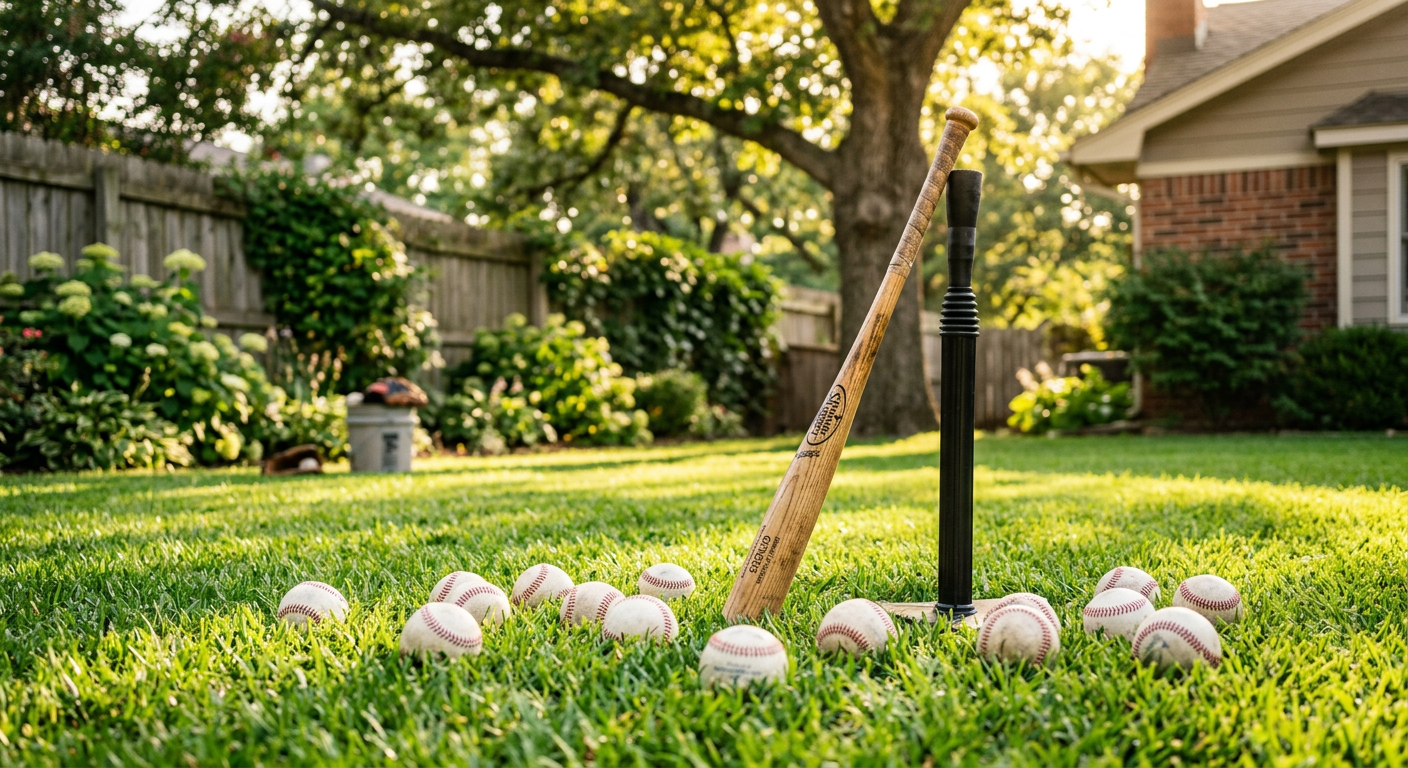
Start with tee work. The hitting tee remains the ultimate tool for ballplayers at every level because the ball sits still, allowing the hitter to focus solely on their mechanics and barrel control. Set the tee at belt height and work on driving line drives straight back into a net.
From there, move to soft toss from the side or front toss behind a protective screen. Keep the atmosphere upbeat and celebrate hard, barrel-to-ball contact rather than whether the ball clears the fence. When hitting is treated as an enjoyable daily habit rather than a high-pressure test, kids naturally look forward to grabbing their bats.
Giving Your Hitter a Dedicated Training Space
Every young hitter benefits from having a reliable spot where they know they can get their work in, whether that is after school, before dinner, or on a quiet Saturday morning. Having dependable equipment in the yard makes it easy for kids to head outside independently and get their swings in without fuss.
That reliability is the exact reason we built the Baseball Permanent Hitting Station. As one of the many training options available for youth development, it is designed for families and programs that want a heavy-duty, American-made setup built to handle thousands of swings season after season. With commercial-grade materials and modular design, it turns any backyard or training area into a dedicated development zone that stays ready whenever your hitter wants to practice.
Keep the Game Fun and Simple
Coaching youth baseball is one of the most rewarding journeys you can share with your child. Remember that progress in baseball is never a straight line. There will be days when every ball flies off the sweet spot, and days when contact is tough to find.
Your steady encouragement, simple cues, and consistent practice routines provide the foundation they need to grow, not just as hitters, but as resilient young athletes who love stepping up to the plate.
Did you know? The concept of Little League baseball was started in 1939 in Williamsport, Pennsylvania, by Carl Stotz, who used rolled-up cardboard for home plate and tree-limb bases so his nephews could have a game tailored to their size.