Mastering the Pickleball Drive: Why Hips Beat Arm Power
By Keaton Smith, Founder of Beast Hack | October 22, 2026
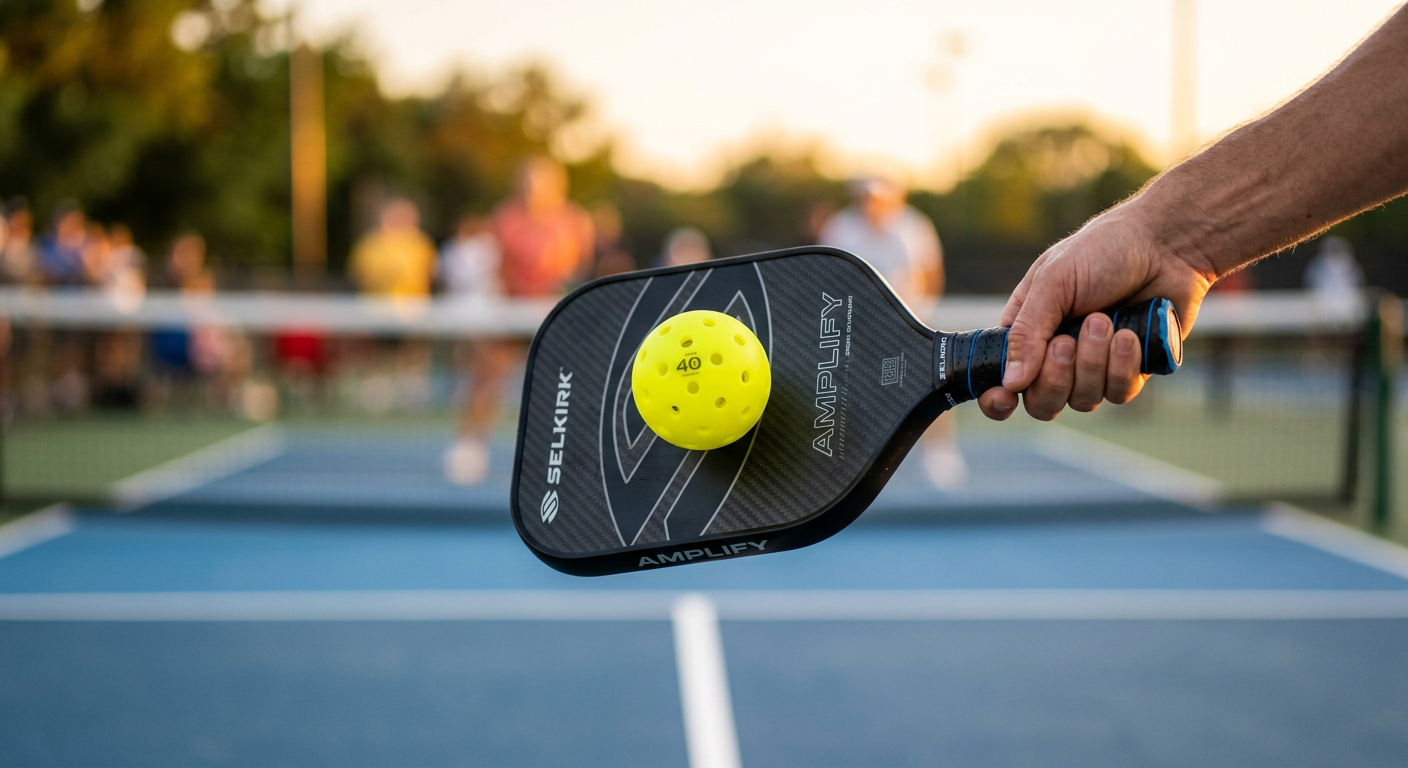
If you spend any time on local courts or browsing player forums, you will notice one question that pops up across every skill level: how do I hit a hard, penetrating drive without constantly spraying it long into the baseline fence?
Whether you are a junior working toward tournament podiums, an adult looking to break into 4.0 play, or a senior wanting to protect your shoulder and elbow from overuse, the desire for a reliable drive is universal. The drive is not just a weapon to hit outright winners. It is a pacing tool that keeps your opponents honest, buys you time to transition to the kitchen line, and sets up your third-shot drops.
However, many players fall into the same trap when they want more pace: they swing harder with their dominant arm. That instinct usually leads to late contact, mishits, and sore joints. The secret to a crisp, heavy ball actually starts from the ground up.
Less Arm, More Hips: The Kinetic Chain
The biggest breakthrough for most players happens when they realize their paddle arm should act as a guide rather than an engine. When you rely solely on your shoulder and bicep to generate ball speed, your margin for error is tiny. You have to time a fast, jerky arm swing perfectly every single time.
Real power and shape come from rotation. By letting your hips lead the way, you engage the larger, stronger muscle groups in your legs and core.
Think of your swing as a kinetic chain. As you prepare for a forehand drive, take a slight shoulder turn and shift your weight to your back leg. As you initiate the forward swing, your hips rotate first, pulling the paddle handle forward while keeping your wrist and forearm loose. Only at the very end does your paddle come through the hitting zone, finishing smoothly across your body to impart natural topspin.
When your hips do the heavy lifting, your arm stays relaxed. A relaxed arm means cleaner contact, better spin control, and far less wear and tear on your joints over a long weekend of play.
Nailing Down Your Contact Point
Even with great hip rotation, a drive will fail if your contact point moves around from shot to shot. If you strike the ball behind your body, you will almost certainly pop it up or push it wide. If you reach too far out, you lose leverage and dump the ball directly into the net.
Your ideal strike zone sits roughly six to eight inches in front of your lead hip, at a comfortable waist height. At this spot, your paddle face is naturally square to your intended target, and your body weight is transferring forward through the shot.
To build an intuitive feel for this spot, try taking shadow swings in front of a mirror or patio door. Freeze your swing right at the imaginary contact point. Check your paddle face: is it slightly closed or neutral? Are your eyes locked on the contact area? Are your feet balanced?
Once your body memorizes what ideal contact feels like, your brain will naturally guide your feet to position your body in that same sweet spot during fast-paced points.
How to Drill Drives Without a Partner
One of the challenges pickleball players face is getting enough clean repetitions. During open rec play, you might hit only four or five true drives in an entire game, which simply is not enough volume to reshape your muscle memory.
Solo training is the fastest route to real mechanical change. Here are two simple solo routines you can run to build repeatable mechanics:
-
Target Depth Calibration: If you have access to a wall or backboard, use chalk or blue painter's tape to mark the net height (thirty-four inches at the center). Then, draw a target box about two to three feet above that line. Step back twelve to fifteen feet and hit controlled drives into the box. Do not worry about hitting the ball at maximum speed. Focus on a relaxed grip, hip rotation, and driving the ball squarely into that designated window.
-
The Drop-and-Drive Progression: On an open court, place a marker or water bottle six feet inside the opponent's baseline. Drop a ball by hand from waist height, let it bounce, rotate your hips, and hit smooth drives toward your target. Hit twenty forehands and twenty backhands. Track how many land deep without sailing out.
Building Consistency at Home
Getting court time can be tough, especially when public courts are crowded. Finding ways to groove your swing mechanics at home gives you a huge advantage over players who only touch their paddle twice a week during open play.
That passion for deliberate, efficient practice is why we built the PicklePost Pro. Crafted right here in the United States using rugged, professional-grade materials, the PicklePost Pro lets you lock in your paddle path, swing plane, and contact point whenever you have five spare minutes. It eliminates the chase and lets you focus purely on the biomechanics that matter: driving through the hips, maintaining a loose arm, and finding that sweet spot out in front.
Solo training stations are one of the most effective tools for isolating muscle memory. When you combine purposeful solo reps with court time, your confidence on the court skyrockets.
Trust the Process
Player development is not about reinventing your game every time you step on the court. It is about identifying the small, fundamental habits that give you the highest return on investment.
The next time you head out to play or drill, resist the urge to muscle your drives with your shoulder. Take a deep breath, keep your paddle arm loose, let your hips lead the swing, and make solid contact out in front. You will be amazed at how much easier the game feels when your body works together.
Fun Pickleball Fact: When Joel Pritchard, Bill Bell, and Barney McCallum invented pickleball in 1965 on Bainbridge Island, Washington, the very first paddles were not high-tech carbon fiber or fiberglass. They were hand-carved out of solid plywood from Pritchard's own backyard tool shed!