Can You Still Improve at Pickleball as You Age?
By Keaton Smith, Founder of Beast Hack | November 19, 2026
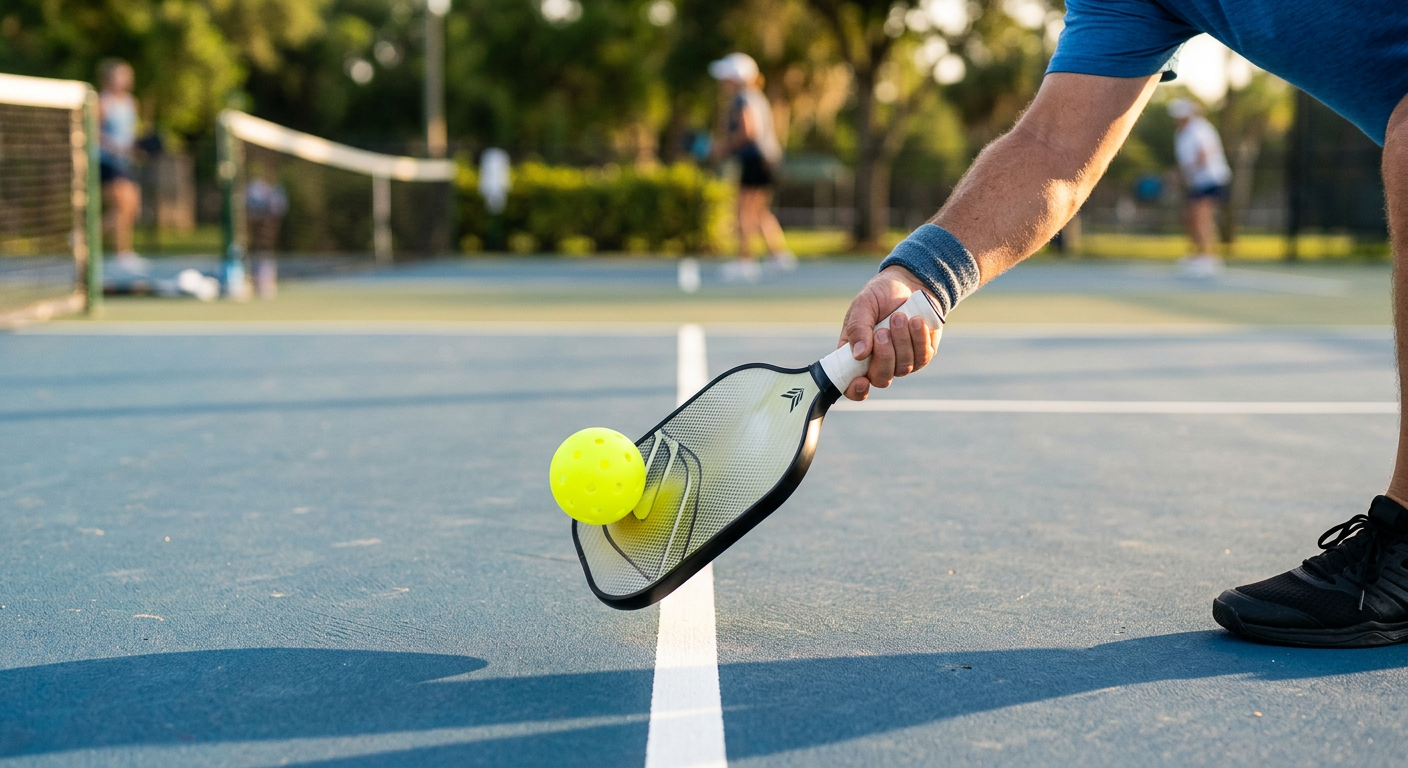
Walk onto almost any pickleball court today, and you will see something truly rare in modern sports. In one game, you might watch a twelve-year-old junior with lightning-fast reflexes teaming up with a seventy-year-old player who places the ball on a dime, competing against two working adults in their thirties.
Lately, there has been a lot of conversation across local clubs and online forums asking a genuine question: can older players truly continue to improve, or does youthful athleticism eventually put a ceiling on your game?
As someone who spends every single day thinking about athletic movement and skill development, my answer is simple: you can absolutely keep getting better. While younger players may have an edge in raw sprint speed or sheer leaping ability, pickleball is fundamentally a game of balance, paddle control, and positioning. When you understand how to train intentionally, age becomes secondary to court craft.
Rethinking the Athletic Advantage
It is easy to watch an athletic, younger player cover the entire court and feel like foot speed is the ultimate weapon. Speed certainly helps when someone makes a mistake, but elite pickleball is not track and field. The game is played in a compact space, especially once all four players reach the kitchen line.
When you look closely at players who consistently win against faster opponents, they rarely scramble. Instead, they read paddle angles early, hold their ground, and take time away from their opponents.
Improving your game at 45, 60, or 75 does not require you to suddenly sprint faster than an eighteen-year-old. It requires you to cut down on unforced errors, recognize shot patterns half a second sooner, and keep your contact point out in front of your body. Those are technical skills, not physiological limits, and technical skills can be refined at any stage of life.
Why Open Play Alone Stalls Player Development
Most players try to improve by simply playing more recreational games. Open play is fantastic for camaraderie and getting exercise, but it is one of the slowest ways to build high-level mechanics.
During a typical game, you might hit only a handful of third-shot drops, a dozen dinks, and a couple of backhand resets under pressure. If you make an error, you rarely get an immediate chance to fix your paddle angle or adjust your stance. Instead, you rotate, serve, and move on.
If you want to make measurable jumps in your skill rating, structured repetition is the secret. Ten to fifteen minutes of focused drilling delivers more paddle contact and muscle memory than two full hours of unstructured open play. When you isolate specific shots (like dropping from the transition zone or absorbing a hard drive at the chest) you teach your central nervous system to react automatically.
Mastering the Soft Game: The Great Equalizer
If power and speed favored pure youth, the "banger" style of play would dominate every bracket. But we all know what happens when a hard hitter runs into a composed player with soft hands: the hard hitter eventually runs out of answers.
The soft game is the great equalizer on the court. A well-placed dink that lands deep in the kitchen forces your opponent to hit up on the ball, instantly neutralizing their power.
To develop softer hands, focus on these three fundamentals during your practice sessions:
- Loosen your grip pressure: On a scale of one to ten, keep your grip around a three or four on resets and drops. A tight hand creates a trampoline effect, popping the ball up for an easy smash.
- Contact out in front: Letting the ball get behind your hip forces you to flick your wrist. Keep your paddle where you can see both the paddle face and the ball in your peripheral vision.
- Use your legs for lift, not your wrist: Even if you have limited mobility, a slight push from your lower body creates a stable, repeatable arc that stays low over the net.
These mechanics do not require explosive vertical jump height. They require discipline, patience, and repetition.
Building a Consistent Practice Routine at Home
One of the biggest hurdles for players of all ages is finding drill partners who share the same desire for intentional practice. Junior players have busy school schedules, working adults balance family and careers, and retirees often find that their peers just want to play games rather than drill.
That is why establishing a home practice routine is so transformative. Solo drilling against a wall or using dedicated training stations allows you to log hundreds of quality touches in your driveway, garage, or backyard without needing to coordinate four schedules.
At Beast Hack, our mission is to build heavy-duty, American-made training gear that empowers athletes of every background to reach their potential. When we designed the PicklePost Pro, we built it specifically to give players a commercial-grade, modular station for dialing in precise paddle path, sweet-spot contact, and reset mechanics at home. Having a reliable tool right outside your door eliminates the friction between wanting to get better and actually putting in the work.
Whether you are a junior learning proper swing paths or a senior player working to keep your reaction time sharp, dedicated repetitions build quiet confidence that carries directly onto the court on game day.
Play the Long Game
Getting older may change the way your body recovers, and it might mean you play a smarter, more calculated style of pickleball. But it certainly does not mean your best days of play are behind you.
When you shift your focus from chasing every wild shot to mastering court positioning, soft touch, and consistent practice habits, the game actually slows down. You start winning points not by out-running your opponent, but by out-thinking and out-executing them.
Pickleball is one of the few sports where wisdom and clean technique can truly overcome raw horsepower. Embrace the process, put in the reps, and enjoy the climb.
What is one part of your game that has actually gotten sharper over the years rather than slower?