Building a Pickleball Game That Lasts at Any Age
By Keaton Smith, Founder and Inventor | November 26, 2026
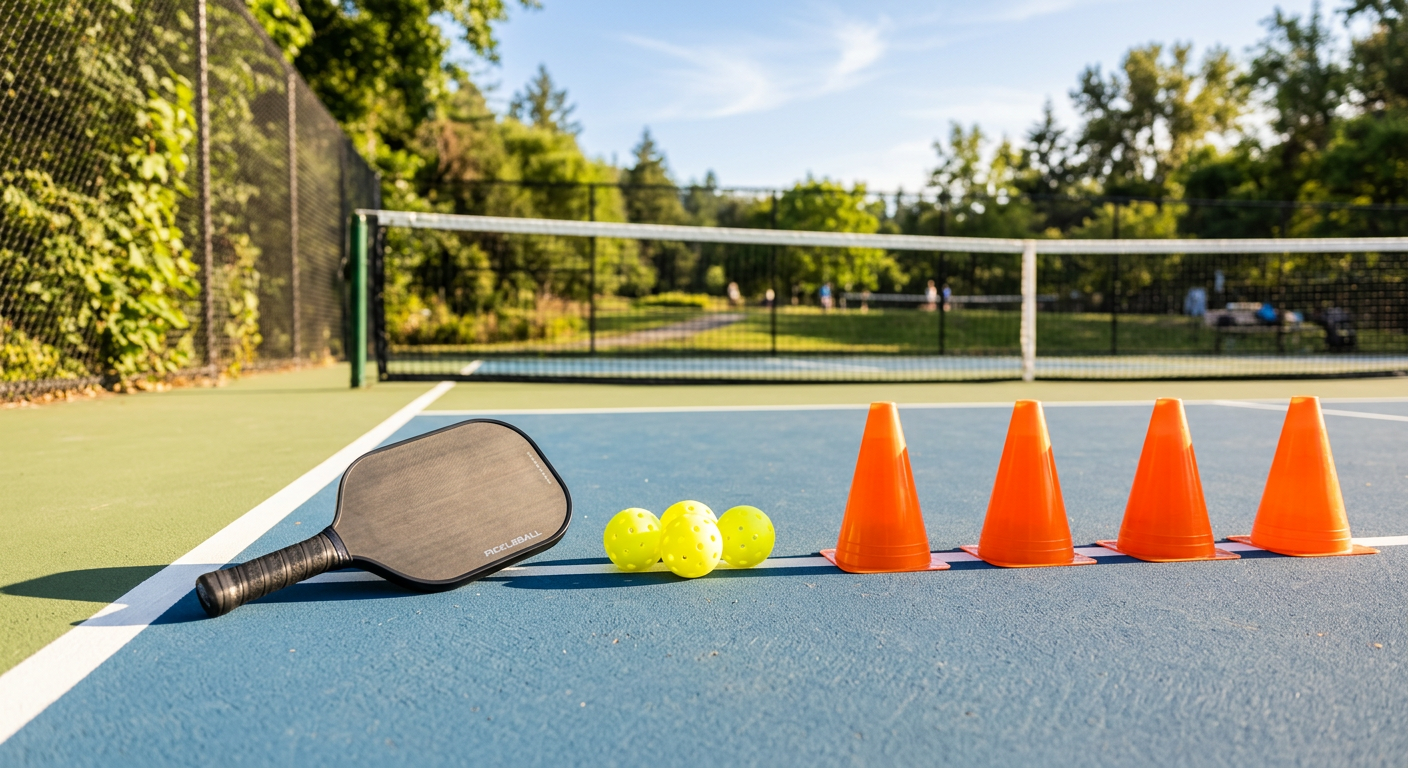
One of the greatest things about pickleball is who you find standing across the net. On any given Saturday morning at your local park, you might see a high-energy twelve-year-old junior player, a competitive adult in their thirties, and a crafty sixty-five-year-old senior sharing the same court. Few sports bring generations together like this one, and fewer still offer such an accessible pathway to stay active, competitive, and social.
Lately, there has been a major surge in interest surrounding mobility, targeted exercise, and joint longevity in pickleball. While much of this discussion focuses on senior players looking to stay agile and pain-free, the underlying truth applies to all of us. Whether you are developing foundational athletic movement as a junior, fighting off the stiffness of a desk job as a working adult, or keeping your knees healthy for tournament play as a veteran, keeping your body ready for the court is the key to playing the game you love for decades to come.
Here is how players of all ages can combine smart physical preparation with deliberate skill work to build a game that lasts.
Prioritizing Movement and Balance Over Pure Speed
Pickleball does not require you to sprint a hundred yards at top speed, but it demands constant deceleration, quick lateral shuffles, and split-second balance adjustments. If your balance is off, your paddle angle will follow suit, leading to popped-up dinks and missed resets.
For junior players, developing early dynamic balance helps build clean movement habits that carry over into every athletic pursuit. For adults and seniors, maintaining lower-body stability and hip mobility is your best defense against common slips, rolled ankles, and knee strain.
You do not need a gym full of heavy equipment to build reliable court balance. Spending just five minutes every morning doing simple bodyweight routines can make an incredible difference:
- Single-leg balances: Stand on one foot for thirty seconds, then switch. Try brushing your teeth on one foot to make it a daily habit.
- Controlled lateral heel-to-toe taps: Step side to side in a gentle squat position, keeping your chest tall and eyes up.
- Calf and Achilles stretches: Gentle stretching against a wall or step keeps the lower legs elastic and ready for sudden kitchen line stops.
When your base is quiet and balanced, hitting a clean shot becomes significantly easier.
Dynamic Warm-Ups: Replacing Static Stretching
A common scene at community courts is seeing players walk straight from their cars onto the court, hit two soft dinks, and jump straight into a full-speed match. That approach might work when you are fifteen, but even then, it does not prepare the nervous system for fast-paced kitchen firefights.
Instead of stretching cold muscles while sitting on a park bench, spend three to five minutes moving through a dynamic warm-up:
- Arm circles and shoulder hugs: Loosen the rotator cuffs and chest before hitting backhands and overheads.
- High knees and butt kicks at half speed: Gradually elevate your heart rate and wake up the hamstrings.
- Shadow dinking: Stand near the line and practice moving your paddle from your ready position through smooth, controlled contact points without a ball.
By treating your warm-up as a deliberate transition from daily life to athletic movement, you prime your eyes, feet, and hands to work in sync from the very first point.
Building Soft Hands Without Court Fatigue
One challenge many players face, especially adults balancing tight schedules and seniors monitoring joint fatigue, is getting enough quality reps. Going out for two hours of hard competitive play five days a week can quickly lead to overuse injuries like tennis elbow or lower back soreness.
Skill development does not require you to exhaust your legs every day. Some of the most valuable practice involves isolating paddle mechanics in a controlled setting. When you remove the chaotic running, you can focus purely on soft contact, tracking the ball all the way into the sweet spot, and repeating a compact, tension-free stroke.
Practicing drop shots, third-shot resets, and controlled punch volleys against a predictable bounce allows you to develop true muscle memory. When you master the feel of absorbing pace with loose wrists and a stable core at home, you will react with calm confidence during fast-paced exchanges on the court.
Creating Your Own Training Setup at Home
At Beast Hack, our mission is to support players across every sport with durable, high-performing training tools built right here in the United States. We believe that deliberate, accessible repetition is the true engine of player development.
If you are looking to sharpen your hands, master your sweet-spot contact, and groove your stroke mechanics without putting unnecessary wear and tear on your body, the PicklePost Pro offers a versatile training station built specifically for your driveway, garage, or patio. Designed with modular American steel construction and high-grade materials, it gives players of all ages the freedom to train paddle speed, hand-eye coordination, and reset control on their own schedule. It is a fantastic companion to live court play, giving you the repetition you need while keeping your joints fresh for game day.
Taking care of your body and refining your fundamentals goes hand in hand. When you pair smart physical care with focused repetition, your game will not only improve this season, it will stay strong for many years ahead.
Fun Pickleball Fact: When Joel Pritchard and Bill Bell invented pickleball in the summer of 1965 on Bainbridge Island, Washington, they could not find any official equipment. They improvised the very first game using ping-pong paddles hand-carved from scrap plywood and a perforated plastic ball found in the backyard.