Bridging Generations on the Pickleball Court
By Keaton Smith, Founder of Beast Hack | October 29, 2026
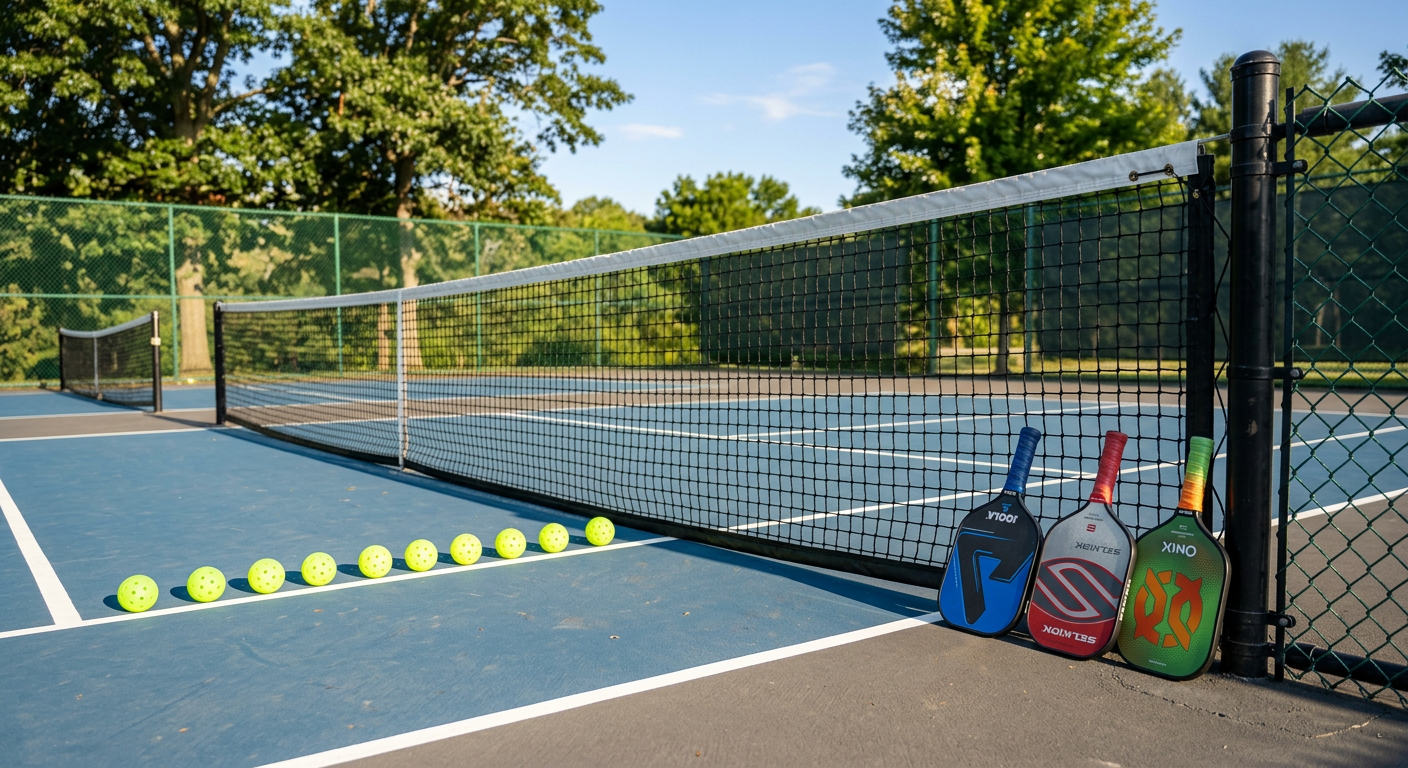
Few sports bring different walks of life together quite like pickleball. On any given morning at public parks and community courts across the country, you will see something truly special: an eight-year-old junior player, a working parent on their lunch break, and a retired grandfather all waiting for the next open game on paddle racks.
Lately, there has been a lot of healthy conversation in community groups and local clubs about how to manage courts when players of vastly different ages and experience levels share the same space. A parent brings a beginner junior to a morning session where seniors usually play a steady, tactical game. Or an eager teen joins an adult recreational ladder and wants to smash every ball from the baseline.
These moments do not have to create friction. In fact, multi-generational play is pickleball at its finest. When we approach court sharing with the right developmental mindset, players of every age group walk away sharper, smarter, and more energized.
The Great Equalizer: Playing with Touch at the Kitchen
When junior players step onto the court, their instinct is often to rely purely on foot speed and overhead power. When seniors step on the court, they usually excel at ball placement, angles, and preserving energy. Adults caught in the middle often want a blend of intense exercise and tactical challenge.
The non-volley zone, affectionately called the kitchen, equalizes all of these differences.
Power does not rule the kitchen; touch, paddle face angle, and balance do. When juniors learn to slow the ball down instead of swatting at it, their ceiling as competitive players skyrockets. When senior players test their anticipation against the quicker reaction times of younger athletes, their hand speed sharpens.
If you are running a mixed-generation game or open play rotation, spend the first five minutes on cooperative dinking. Challenge everyone to keep a single dink rally going for thirty consecutive shots into the kitchen without attacking. This removes the impulse to finish points instantly, saves joint wear for older players, and instills much-needed patience in younger athletes.
Shifting from "Survival Play" to Intentional Repetition
One common frustration across recreational courts happens when someone wants to practice a specific shot, but the game situation keeps them in survival mode. Beginners end up chasing balls they are not ready to return, and experienced players end up holding back so much that they do not get a genuine workout.
The solution is carving out time for focused station work before or after open play games. When you isolate specific mechanics, age disappears:
- Soft-Drop Resets: Have one partner hit firm, waist-high balls from mid-court while the other partner works solely on cushioning the ball into the kitchen from the transition zone.
- Targeted Third Shots: Place a towel or target zone two feet inside the opponent's kitchen line. Practice dropping shots softly over the net from the baseline, focusing on a smooth lifting motion with the legs and shoulder rather than a wrist snap.
- Reflex Volleys: Stand just behind the non-volley line and work through gentle paddle-to-paddle volleys. The goal is quiet feet, compact swings, and zero backswing.
When players take twenty minutes to practice high-volume repetitions outside of a competitive scoring game, court anxiety disappears. Juniors gain the consistency they need to be reliable doubles partners, and adults and seniors gain the confidence that their ball control can neutralize raw athletic speed.
Building a Court Culture That Welcomes Everyone
Player development is not just about what happens to the paddle; it is about the environment we build on our local courts. The strongest pickleball communities are those where seasoned players take pride in mentoring younger players, and younger athletes show genuine respect for the tactical wisdom of veteran players.
If you are an experienced player sharing the court with a beginner or a young junior, use the opportunity to test your own discipline. Can you place every return two feet inside the baseline without overpowering them? Can you reset an erratic shot right to their paddle so the rally stays alive?
If you are a parent bringing a junior to open play, teach them court awareness early. Explain why we do not run across active courts during live points, how paddle racks work, and why mastering the soft game is cooler than hitting a 50-mile-per-hour out ball. Mutual respect turns an awkward rotation into the highlight of someone's week.
Quality Repetitions in Your Own Space
You do not always have an empty court or a dedicated hitting partner available, especially when local facilities are packed. That is where home practice becomes an invaluable asset for players of all ages. Developing muscle memory, hand-eye coordination, and clean contact can happen right in your driveway, garage, or backyard.
At Beast Hack, we engineer professional-grade training stations designed to give athletes consistent, high-volume repetitions wherever they practice. Our PicklePost Pro is built right here in the United States using heavy-duty steel and precision modular components. Whether you are a junior developing hand speed, a parent refining your third-shot drops after work, or a senior maintaining sharp hand-eye coordination without having to chase errant balls across the park, it provides the solid, dependable feedback you need to build confidence before your next open session.
Pickleball belongs to every generation. When we share knowledge, respect the pace of the game, and put in deliberate practice reps, the entire community rises together.
What is one habit or shot you have learned from playing against a partner who was either much younger or much older than you?